


September 2025 CarbonBetter® Impact Update


205.9k
mWh
Provision customers have funded 205,837 mWh of clean energy generation, which could power 22,100 homes for a year.*
140.5k
tons
Provision customers have offset 140,467 tons of carbon, which is like avoiding over 357.5 million miles of driving.**
154k
trees
Provision customers have funded planting 154,031 trees, which may sequester over 2,542 tons of carbon in their lifetime.***
Every month we share the positive impact our customers have made through their use of CarbonBetter-certified 100% energy, which is included in every Provision clean energy supply plan. Each customer on these plans receives an email with their personal impact for the month, and this blog post reflects the impact all of our customers have made together since we became CarbonBetter-certified in October 2020.
We’re honored to be able to provide affordable clean energy that makes a real difference. Check out all of our past Impact Updates here!
Our Customers’ CarbonBetter Impact – September 2025 Update
Want to be included in our next impact update?
It’s easy to contribute to the positive impact we make each month. All Provision energy plans include CarbonBetter clean energy, which helps you make a difference automatically when you use energy at home.
Our customers help fund clean energy generation through renewable energy certificates, offset carbon through carbon credits, and plant trees to aid in reforestation and increase our natural carbon-capturing capabilities. It’s never too late to start using your energy for good.
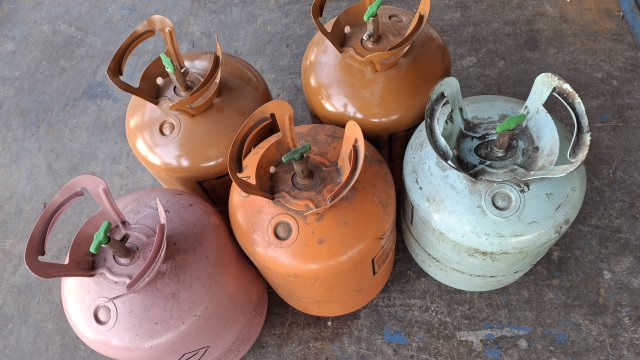
September 2025 Featured Project: HFC Reclamation in Ohio
About the Project
The Certified Reclaimed HFC Refrigerants, Propellants, and Fire Suppressants Version 2.0 methodology is a carbon crediting framework developed by the American Carbon Registry (ACR). It provides rules and procedures for quantifying, monitoring, reporting, and verifying greenhouse gas (GHG) emission reductions and removals achieved through the reclamation and use of certified reclaimed HFCs instead of producing and using new (virgin) HFC refrigerants, propellants and fire suppressants. This methodology applies to projects in the US, Canada and Mexico where reclaimed HFCs are used in refrigeration, air-conditioning, aerosol propellants and fire suppression equipment to displace virgin HFC use.
How It Works
Eligible Activities
Projects must involve the reclamation and use of certified reclaimed HFCs (recovered, refined to meet quality standards and tested) for:
- Existing equipment servicing (e.g., refrigerators, AC units, fire systems)
- Newly manufactured equipment charging
The certified reclaimed HFCs must meet defined quality standards (e.g., AHRI 700) and be supplied through proper channels.
Applicability & Eligibility
- Projects must be in eligible sectors and segments with low market adoption of reclaimed HFCs, demonstrating additional benefit beyond business-as-usual.
- A performance standard based on market adoption is used to establish additionality.
Baseline & Quantification
- The baseline scenario assumes continued use of virgin HFCs.
- Projects calculate the difference between baseline emissions (from virgin HFC use) and actual emissions when reclaimed HFCs replace virgin HFCs.
- Quantification includes emissions across the lifecycle—initial charge, servicing/leaks, and disposal.
Monitoring & Reporting
Projects must have robust monitoring plans that track:
- Amounts of certified reclaimed HFCs used
- The transfers/sales/installation data
- Emission reduction performance throughout reporting periods (≤ 12 months)
Crediting periods are up to 15 years (longer for fire suppressants) based on expected HFC loss during equipment lifecycle.
Verification
Independent third parties verify that project data, monitoring and reported emissions reductions comply with the methodology and ACR standards.
Project Benefits
Climate & Environmental
- Avoids greenhouse gas emissions associated with producing and using new HFCs, which are high-GWP (global warming potential) gases.
- Supports reduction of potent climate-forcing emissions in major cooling and fire safety sectors.
Market & Industry
- Creates a financial incentive (carbon credits) for reclaiming and re-using HFCs, accelerating adoption of lower-emission practices.
- Encourages development of reclaimer infrastructure and certified supply chains for reclaimed HFCs.
Regulatory & Additionality
- By requiring sectors with low reclaimed HFC adoption, the methodology ensures climate benefits are beyond business-as-usual and not just regulatory compliance activities.
Conclusion
The ACR Certified Reclaimed HFC v2.0 methodology establishes a rigorous and transparent framework to quantify and credit greenhouse gas emission reductions from using certified reclaimed HFC refrigerants, propellants and fire suppressants rather than new production. It sets clear eligibility, baseline, monitoring, reporting, and verification requirements to ensure emission reductions are real, measurable, and additional. By doing so, it helps mobilize carbon market incentives to reduce high-GWP emissions in critical cooling and fire protection sectors, contributing to broader climate mitigation goals.
Switch to Provision and make a positive impact on the planet through your energy consumption!
Every Provision Customer Makes a Difference
About CarbonBetter Impact Calculations:
*The typical home in your area uses 9,300 kWh of electricity per year.
**https://www.epa.gov/energy/greenhouse-gases-equivalencies-calculator-calculations-and-references#gasoline
***https://www.epa.gov/energy/greenhouse-gases-equivalencies-calculator-calculations-and-references#seedlings
Impact is calculated based on our customers’ billings in the impact month, but planting, funding, and offsetting may not happen in that month. These activities must align with planting seasons and project life cycles to be effective. If you have any questions, please contact us at hello@getprovision.com.