


August 2025 CarbonBetter® Impact Update


Every month we share the positive impact our customers have made through their use of CarbonBetter-certified 100% energy, which is included in every Provision clean energy supply plan. Each customer on these plans receives an email with their personal impact for the month, and this blog post reflects the impact all of our customers have made together since we became CarbonBetter-certified in October 2020.
We’re honored to be able to provide affordable clean energy that makes a real difference. Check out all of our past Impact Updates here!
Our Customers’ CarbonBetter Impact – August 2025 Update
199.4k
mWh
Provision customers have funded 199,364 mWh of clean energy generation, which could power 21,436 homes for a year.*
139.5k
tons
Provision customers have offset 139,542 tons of carbon, which is like avoiding over 355 million miles of driving.**
151.3k
trees
Provision customers have funded planting 151,311 trees, which may sequester over 2,497 tons of carbon in their lifetime.***
Want to be included in our next impact update?
It’s easy to contribute to the positive impact we make each month. All Provision energy plans include CarbonBetter clean energy, which helps you make a difference automatically when you use energy at home.
Our customers help fund clean energy generation through renewable energy certificates, offset carbon through carbon credits, and plant trees to aid in reforestation and increase our natural carbon-capturing capabilities. It’s never too late to start using your energy for good.
August 2025 Featured Project: Foam Blowing Agent Methodology
About the Project
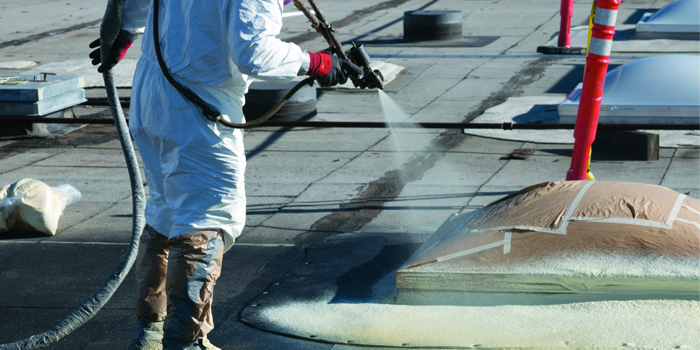
The Foam Blowing Agent Methodology helps measure and reward companies for reducing greenhouse gas (GHG) emissions by switching to more climate-friendly chemicals in foam production.
Foams are used in things like insulation, fridges, and building materials. To make foam, manufacturers use chemicals called blowing agents, which create the bubbles inside the material.
The problem is that traditional blowing agents, such as HFC-134a or HFC-245fa, are extremely powerful greenhouse gases. When foam is made, used, or thrown away, these gases can leak into the air and trap heat thousands of times more effectively than CO₂.
This methodology from the American Carbon Registry (ACR) lets companies that switch to cleaner alternatives, like HFOs or CO₂-based agents, earn carbon credits for the emissions they avoid.
How It Works
This system applies to foam manufacturers that:
- Are replacing high-GWP agents with low-GWP ones (less than 5 GWP).
- Make foams like rigid polyurethane or polystyrene insulation.
- Operate in approved regions, mainly North America.
It focuses on emissions that happen during:
- The making of blowing agents,
- The manufacturing of the foam, and
- The use of foam over time.
Emissions that might happen after 10 years, for example, when foam products are thrown away, aren’t counted.
The project compares two situations:
- Baseline (Before): What emissions would have occurred if the company kept using the old, high-GWP blowing agent.
- Project (After): What emissions actually happen after switching to a low-GWP agent.
Companies must:
- Track how much foam they make and what chemicals they use.
- Keep detailed records and perform quality checks.
- Have their data independently verified before carbon credits are issued.
Each project earns credits for up to 10 years of emission reductions.
Project Benefits
Environmental Benefits
- Emission Cuts: Switching agents can reduce GHG emissions by up to 99%.
- Lasting Impact: Even without counting end-of-life emissions, reductions during production and use significantly help the climate.
- Global Alignment: Supports international climate agreements like the Montreal Protocol and Kigali Amendment.
Environmental Benefits
- Massive Emission Cuts: Switching agents can reduce GHG emissions by up to 99%.
- Lasting Impact: Even without counting end-of-life emissions, reductions during production and use significantly help the climate.
- Global Alignment: Supports international climate agreements like the Montreal Protocol and Kigali Amendment.
Economic Benefits
- Carbon Credits: Companies earn ACR-certified credits for each tonne of CO₂ avoided, which they can sell or use to meet climate targets.
- Innovation Boost: Encourages development of new, cleaner foam technologies.
- Competitive Edge: Early adopters gain regulatory and reputational advantages as HFCs are phased out.
Conclusion
The Foam Blowing Agent Methodology from the American Carbon Registry offers a scientifically robust and operationally practical framework to quantify and reward emissions reductions from converting to low-GWP foam systems.
By establishing clear baselines, monitoring requirements, and crediting rules, it:
- Incentivizes rapid industry transition away from high-impact HFCs.
- Provides verifiable, high-integrity carbon offsets for buyers and regulators.
- Supports global climate goals by addressing an often overlooked but significant emissions source.
While the methodology is still in its public comment phase and may evolve, its structure sets the foundation for credible, scalable carbon reduction in the foam sector, a key step in decarbonizing industrial materials.
Switch to Provision and make a positive impact on the planet through your energy consumption!
Every Provision Customer Makes a Difference
About CarbonBetter Impact Calculations:
*The typical home in your area uses 9,300 kWh of electricity per year.
**https://www.epa.gov/energy/greenhouse-gases-equivalencies-calculator-calculations-and-references#gasoline
***https://www.epa.gov/energy/greenhouse-gases-equivalencies-calculator-calculations-and-references#seedlings
Impact is calculated based on our customers’ billings in the impact month, but planting, funding, and offsetting may not happen in that month. These activities must align with planting seasons and project life cycles to be effective. If you have any questions, please contact us at hello@getprovision.com.